 how-to
Best Way to Sell Retro Game Collection: 2026 Guide
Table of Contents
- Step 1: Assess and Inventory Your Collection
- How to Price Retro Games Using Market Data
- Bulk Sales vs. Individual Listings: Choosing Your Strategy
- Where to Sell Old Video Games: Platform Comparison
- Step 2: Prepare Games for Sale and Shipping
- How to Sell Retro Games for Cash: Maximizing Your Payout
- Common Mistakes to Avoid When Selling Your Collection
- Frequently Asked Questions
Last Updated: October 11, 2026
Step 1: Assess and Inventory Your Collection
The first step to successfully sell retro game collection items is understanding exactly what you own. Before you list anything, you need a complete picture of your inventory, condition, and value. This foundation determines which selling strategy makes sense and what price you can realistically expect.
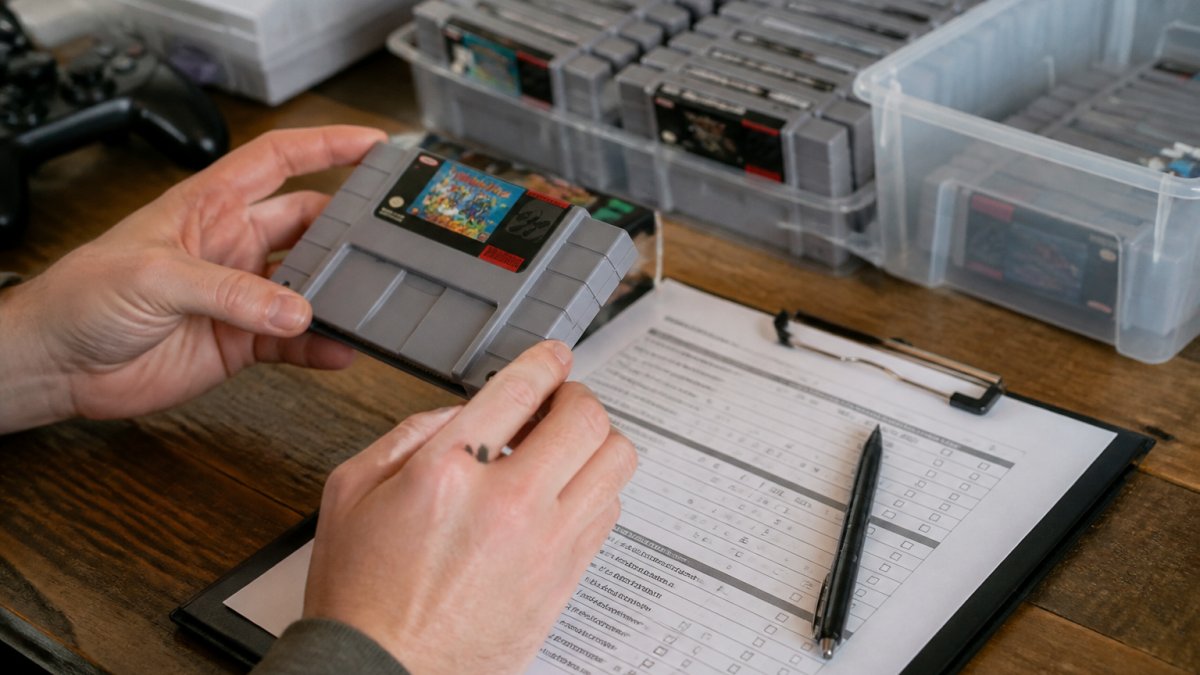
Start by gathering everything in one place. Pull out all cartridges, discs, consoles, and accessories. Create a spreadsheet or use a collection-tracking tool like PriceCharting's collection tracker to document each item. Record the system, game title, and format.
Condition Grading and Completeness
Condition determines value more than almost anything else. A complete copy of a game with the original case and manual sells for significantly more than a loose cartridge.
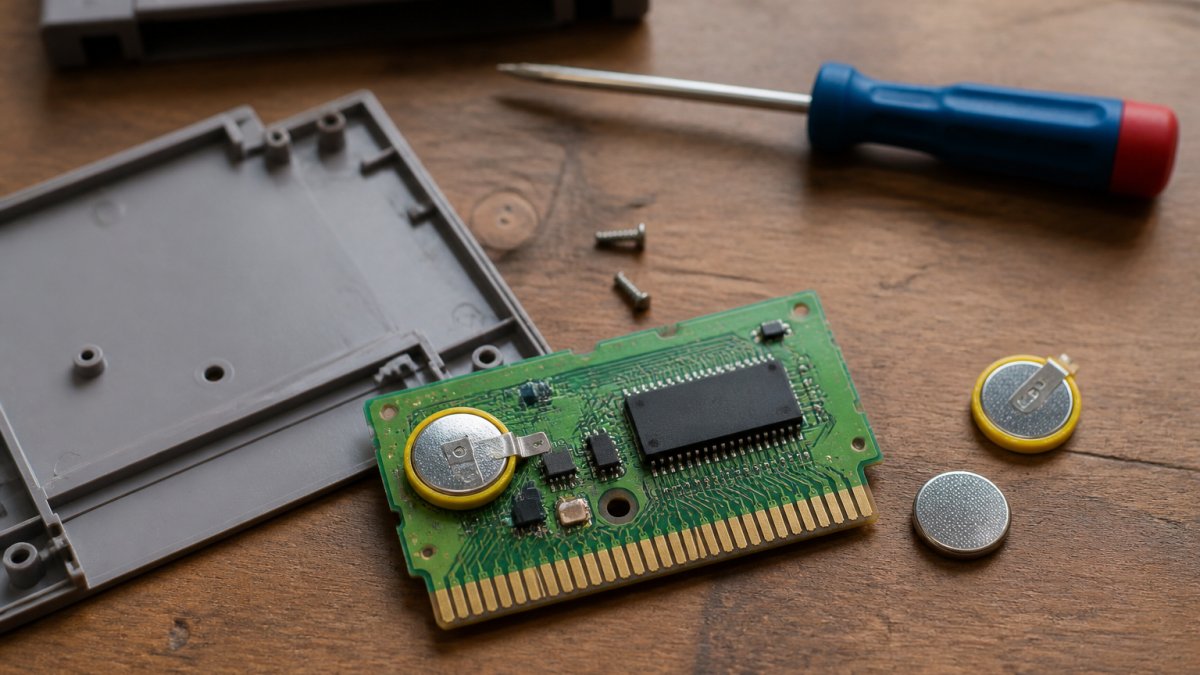
Check for physical damage: cracks in cases, worn labels, discolored cartridges, or disc rot. Test cartridges and consoles to confirm they work. Many retro items have battery-backed save files that fail over time.
Completeness matters enormously. Note whether you have the original box, manual, inserts, and all cables. Games with complete original packaging command premium prices.
Checking for Authenticity and Defects
Counterfeit retro games exist, especially for popular titles. Learn to spot fakes before listing. Check for misaligned labels, incorrect font weights, or unusual plastic textures. Compare your cartridges directly to photos of authentic versions online.
Test for common defects: cartridges that don't load properly, consoles with stuck controllers, or discs with surface scratches that affect playback. A game that boots but has save issues is still defective. Document these problems clearly in your notes, honesty about condition builds buyer trust and prevents returns.
How to Price Retro Games Using Market Data
Pricing is where most sellers stumble. Too high and you won't get offers. Too low and you leave money on the table. The solution is using actual market data, what people have recently paid for games like yours.
Using Price Guides and Sold Listings
Price guides like PriceCharting and VG Collector Guide provide starting points, but they're estimates, not guarantees. The real price data comes from completed sales. On eBay, search for your game and filter by "sold listings." Look at the last 10-20 completed sales in similar condition.
Note the variation. A game might have sold for $8, $12, $15, and $9 in the past month. That range tells you the realistic market. If most sales cluster around $12, that's your baseline.
Identifying Rare and High-Value Titles
Some games command premium prices because they're genuinely scarce. Titles released late in a console's lifecycle, games with limited print runs, or games that were poorly received at launch often became rare. Research your collection against known rare-game lists for each system.
Common games, the ones everyone owned, sell for less because supply is high. Identifying which titles in your collection are common versus uncommon changes your selling strategy dramatically. A bulk sale might make sense for 50 common games but a mistake for three rare titles worth $30 each.
Bulk Sales vs. Individual Listings: Choosing Your Strategy
This decision shapes everything that follows. Selling your entire collection as one lot is fast and simple. Selling individual games takes time but often yields more money. The right choice depends on your collection size, time availability, and how much money you want to extract.
When Bulk Sales Make Sense
Bulk sales work best if your collection is large, contains mostly common games, or you need cash quickly. Listing 200 games individually takes 10-15 hours and creates 200 separate transactions. Selling the same collection as one lot takes 30 minutes.
Bulk buyers, whether local resellers, online dealers, or collectors, offer convenience over maximum price. You get paid once, hand over everything, and you're done.
When Individual Listings Yield Better Returns
Individual listings make sense when your collection contains rare titles, is relatively small (under 50 items), or you have time to manage listings. Rare games that sell for $20-50 each shouldn't go into a bulk lot at $5 each.
If you enjoy the process or want maximum return, individual listings win. You control pricing, can highlight condition and completeness, and reach buyers specifically hunting for those games. The trade-off is effort and slower cash conversion.
Where to Sell Old Video Games: Platform Comparison
Each selling channel has different fees, reach, and ease of use. Your choice affects your net payout significantly.
| Platform | Best For | Shipping | Fees | Speed |
|---|---|---|---|---|
| eBay | Individual listings, auctions, broad reach | Seller arranges | 12-15% of sale | 5-14 days |
| Facebook Marketplace | Local sales, bulk lots, no shipping | Local pickup | None | 1-3 days |
| Mercari | Quick sales, smaller lots | Prepaid label | 10% + payment fee | 3-7 days |
| Gameflip | Retro-game specialists, authenticated sales | Prepaid label | 8% + payment fee | 5-10 days |
| Local game store | Bulk sales, immediate cash, convenience | None | Trade-in discount | Same day |
Online Marketplaces (eBay, Facebook Marketplace, Mercari)
eBay remains the largest marketplace for retro games. Completed-sales data is transparent, buyer protection is strong, and reach is global. The downside: fees run 12-15% of your sale price when you combine listing fees, final-value fees, and payment processing. A $100 game nets you roughly $85-88 after fees.
Facebook Marketplace offers zero fees and local pickup, eliminating shipping headaches. You meet the buyer, hand over the games, and get paid immediately. The downside: local reach limits your buyer pool, and you're responsible for vetting buyers yourself.
Local Game Stores and Trade-In Programs
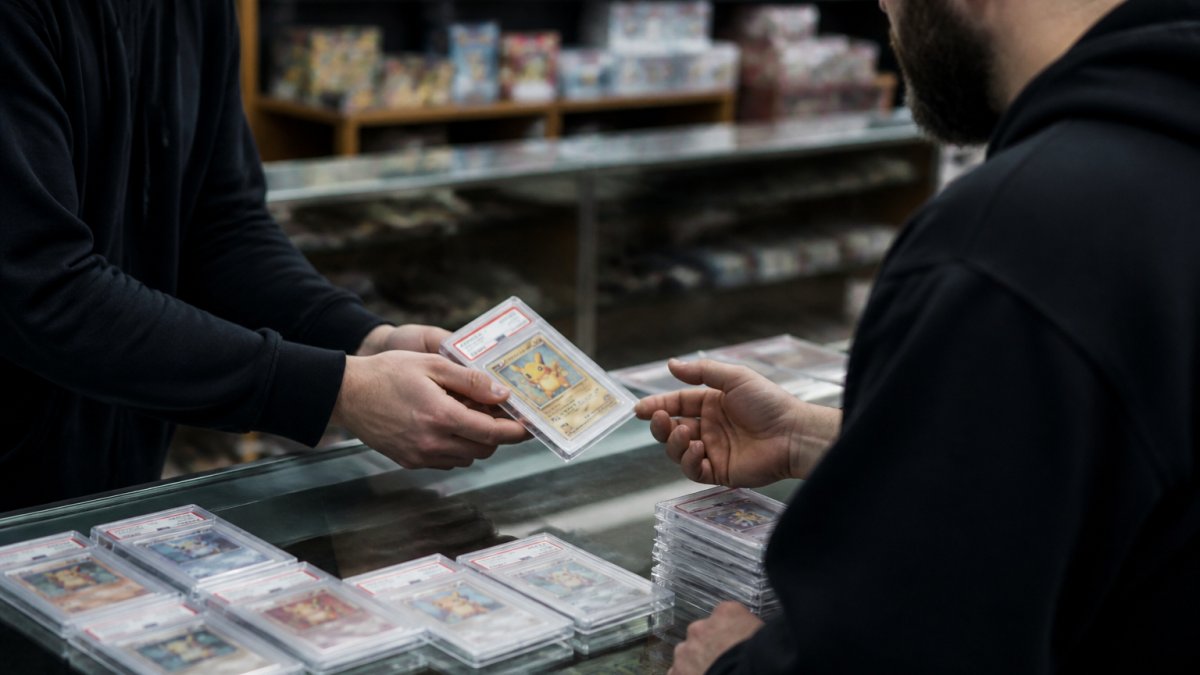
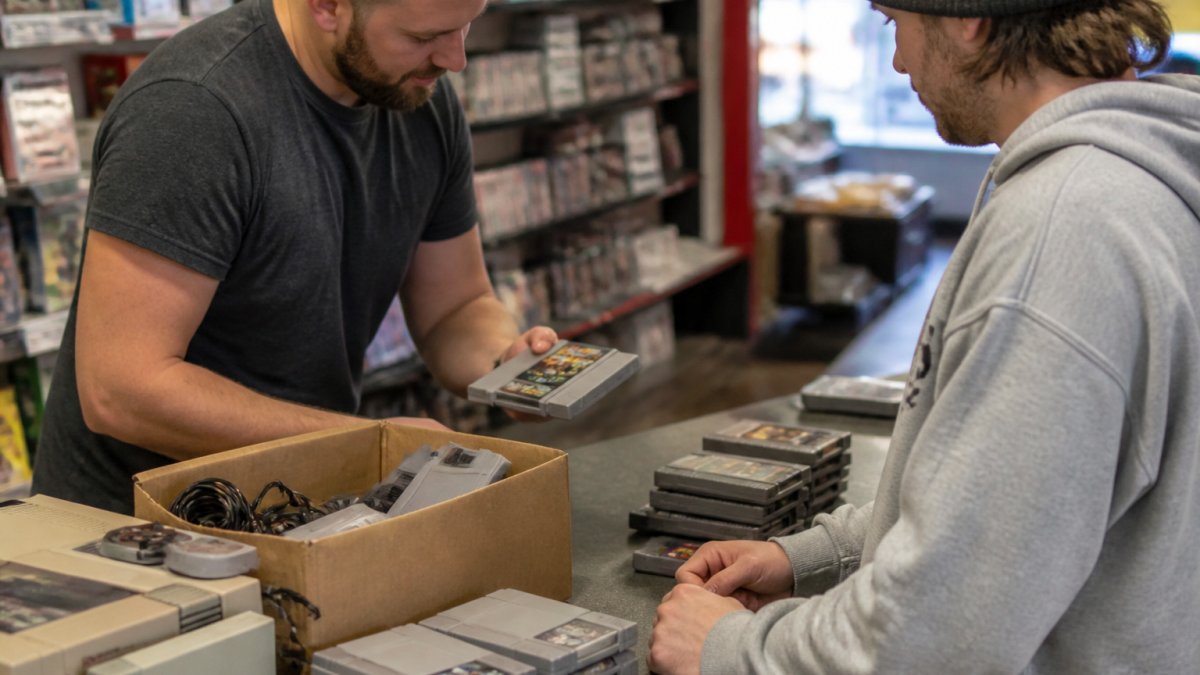
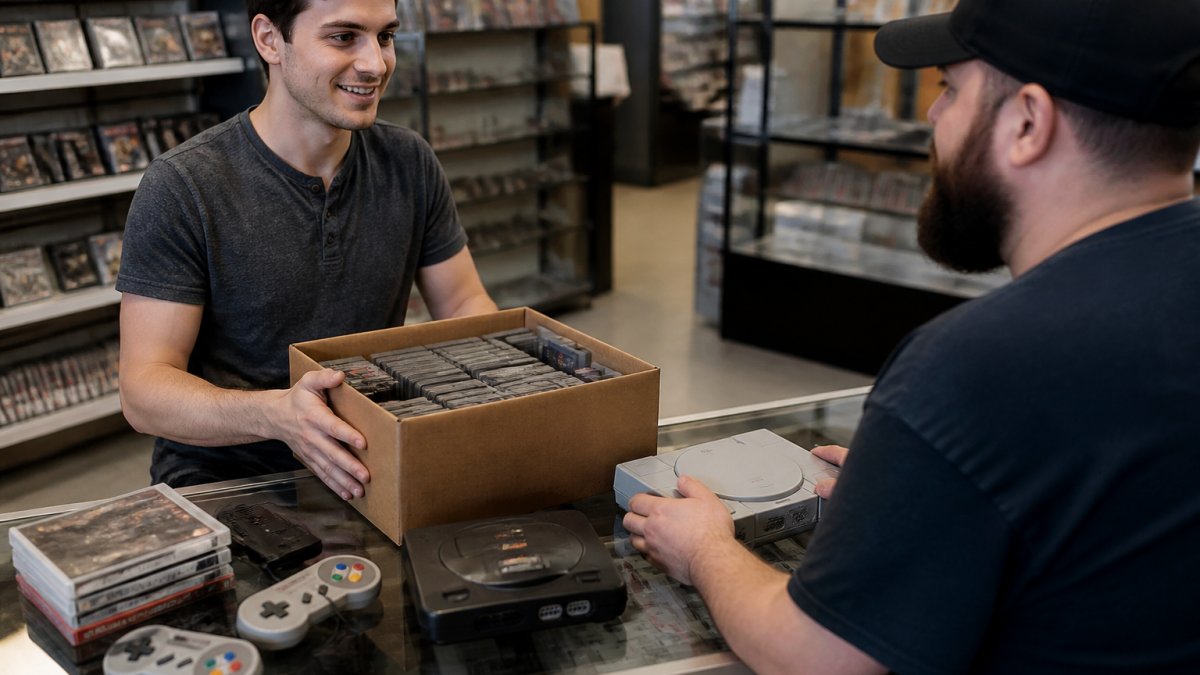
Local game stores like Retroaholics in Canton, Ohio, offer immediate cash and zero shipping hassle. Their trade-in programs evaluate your collection on the spot. The trade-off: they buy at wholesale prices, typically 40-60% of retail value, because they need margin to resell.
This option makes sense if you want cash today, your collection is large, or you prefer supporting a local business. Retroaholics provides quality-verified products and a community hub for retro gaming enthusiasts, making it ideal if you value convenience and local connection over maximum payout.
Specialty Platforms (Gameflip, Whatnot)
Gameflip positions itself specifically for retro-game sales. It handles authentication and buyer protection, reducing your risk. Fees are slightly lower than eBay (8%), but the platform is smaller, so reach is narrower. Whatnot operates as a live-auction platform, which can create excitement and drive prices up, but it requires you to be present and engaged during sales.
Step 2: Prepare Games for Sale and Shipping
Once you've decided where and how to sell, preparation matters. Games arrive damaged or unclean and you lose the sale or face returns. Buyers expect items to match their descriptions.
Cleaning and Testing Before Listing
Clean cartridges with a soft, dry cloth or isopropyl alcohol on a cotton swab. Avoid submerging them. Test consoles and cartridges to confirm they work. A cartridge that boots is different from one that plays through an entire game without glitching. Document what you tested: "Tested and working" is vague.
For disc-based games, inspect for scratches. Minor surface scratches don't affect play; deep scratches or cracks do. Clean discs gently with a microfiber cloth, moving radially from center to edge, never in circles. Never use abrasive materials.
Safe Packing and Insurance for Valuable Items
Retro games are fragile. Cartridges crack, discs break, and consoles get damaged in transit. Pack carefully: wrap each item individually in bubble wrap, use a sturdy box, and fill empty space with packing peanuts or crumpled paper. A $50 game damaged in shipping costs you the sale and a refund.
For high-value items (games worth $50+), purchase shipping insurance. It costs 1-2% of the declared value but protects you if the package arrives damaged. Include photos of the packed item and the sealed box in your records.
How to Sell Retro Games for Cash: Maximizing Your Payout
Pricing is set, platform is chosen, and items are listed. Now you negotiate and close sales.
Negotiating Fair Offers and Avoiding Lowball Deals
Expect offers below your asking price, especially on eBay and Facebook Marketplace. Decide your minimum acceptable price before listing. If you listed a game at $25, know whether you'll accept $20 or if $22 is your floor. Stick to it.
Lowball offers, $5 for a $25 game, aren't worth your time. Politely decline and wait for serious buyers. Many sellers accept the first offer out of impatience and regret it later. A few extra days of waiting often brings a better offer.
Understanding Fees, Shipping Costs, and Net Proceeds
Calculate your actual take-home before committing to a platform. A $100 sale on eBay with 12% fees and $8 shipping you cover nets roughly $80. The same sale locally on Facebook Marketplace nets $100. The difference is significant across a large collection.
Create a simple spreadsheet: List Price → Fees → Shipping Cost → Your Net. This reveals which platform actually maximizes your payout for your specific collection. Don't assume; calculate.
Screening Buyers and Staying Safe
On platforms without buyer verification, ask questions. A buyer with zero feedback and a vague message ("I'll take it") is riskier than an established buyer with positive reviews. Trust your instincts. If a deal feels off, decline it.
For local sales, meet in a safe public location during daylight. Bring someone with you. Count cash carefully before handing over items. Take photos of the transaction for your records. Never agree to ship after a local sale, hand-to-hand only.
Common Mistakes to Avoid When Selling Your Collection
Overpricing is the most common error. New sellers often price based on "what I paid" or "what I think it's worth," not market reality.
Underestimating shipping costs is another trap. A heavy console costs $15-25 to ship. If you didn't factor that in, your profit vanishes.
Mixing condition grades loses sales. A buyer expects "excellent" to mean what it means.
Listing everything as one massive lot when items vary wildly in value is a mistake.
Selling your retro game collection doesn't have to mean settling for pennies or spending months managing listings.
At Retroaholics in Canton, Ohio, we've helped collectors navigate this exact decision. Our trade-in program offers immediate cash and quality-verified products, while our community hub connects you with other enthusiasts who value what you're selling. Whether you choose to sell online or locally, start with honest assessment, accurate pricing based on recent market data, and careful preparation.
Frequently Asked Questions
What is the best way to sell retro games for cash?
The best way to sell retro games for cash depends on your collection size and timeline. For maximum cash on valuable titles, list individually on eBay or Facebook Marketplace using recent sold listings to set prices. For speed and convenience, sell in bulk to a local game store or through Retroaholics' trade-in program. Online platforms typically offer higher prices but require more effort; local sales avoid shipping and get you cash faster. Compare your collection's value, condition, and rarity before choosing your channel.
How do I find out what my retro games are worth?
Use PriceCharting or VG Collector Guide to get a baseline estimate by entering your games into their databases. For accurate current market value, search completed and sold listings on eBay for identical titles with the same condition and completeness. Check the actual sale prices, not asking prices. Rare or high-condition games often sell for significantly more than guide estimates. Document your findings to support your asking price and negotiate confidently with buyers.
Should I sell retro games individually or as a collection?
Sell individually if your collection contains rare, high-value titles or if you have time to manage multiple listings, you'll typically earn more. Sell in bulk if you want speed, simplicity, and guaranteed cash without shipping logistics. Bulk sales suit large collections with many common games. A hybrid approach works too: list rare games individually on eBay while bundling duplicates and common titles to sell locally or in bulk. Your choice depends on urgency, collection composition, and willingness to invest effort.
How can I avoid scams when selling a game collection?
Meet local buyers in safe, public locations and inspect payment methods before handing over items. Use buyer-protection platforms like eBay or Facebook Marketplace rather than direct transfers. Verify buyer history and feedback ratings. For high-value collections, consider selling to established retailers or stores like Retroaholics that offer transparent trade-in processes. Never ship without confirmed payment. If a deal seems too good to be true, unusually high offers or pressure to move quickly, walk away.