 how-to
How to Trade In Retro Games Locally: A Step-by-Step Guide
Table of Contents
- Why Trading In Retro Games Locally Beats Selling Online
- What to Bring and How to Prepare Your Retro Games for Trade-In
- Retro Game Trade-In Value Guide: What Actually Drives Your Offer
- Trade-In Credit vs. Cash: Which Payout Makes Sense for You
- The Best Way to Sell Retro Games You Don't Want to Trade
- Spotting Reproduction Carts and Fakes Before You Trade
- Safety, Legal, and Tax Basics for Local Trades
- Conclusion: Trade Locally, Play Forever
- Frequently Asked Questions
Last Updated: October 4, 2026
Why Trading In Retro Games Locally Beats Selling Online
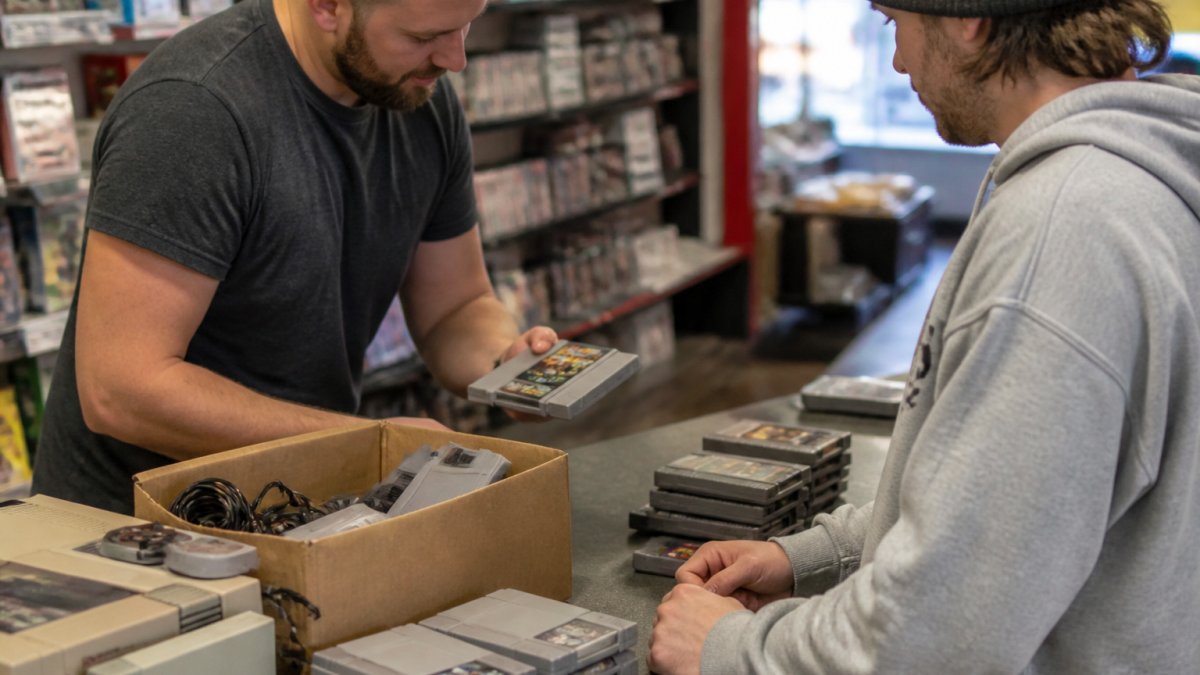
Trading in retro games locally turns a dusty shelf of cartridges into store credit or cash without shipping costs, listing fees, or packages going missing.
Online marketplaces have their place, but most guides treat selling online as the default and local trade-in as the fallback.
- No shipping. Cartridges are heavy, and consoles are heavier. You skip the boxes, the tape, and the trip to the post office.
- No seller fees. Platforms take a cut of every sale. A trade-in offer is the full amount, applied directly to your purchase.
- Instant payment. You get cash or store credit the same day, not after a buyer confirms delivery.
The trade-off is real, though. The FTC's consumer advice on selling used goods makes a useful point here: know what your item is worth before you agree to any deal.
What to Bring and How to Prepare Your Retro Games for Trade-In
Bring the games, consoles, controllers, and every cable and power supply you still have. A complete setup is worth more than a bare console.
Here is the short list of what to pack:
- Consoles, with their original power adapters
- Controllers, including any extras
- All cables, especially AV or HDMI
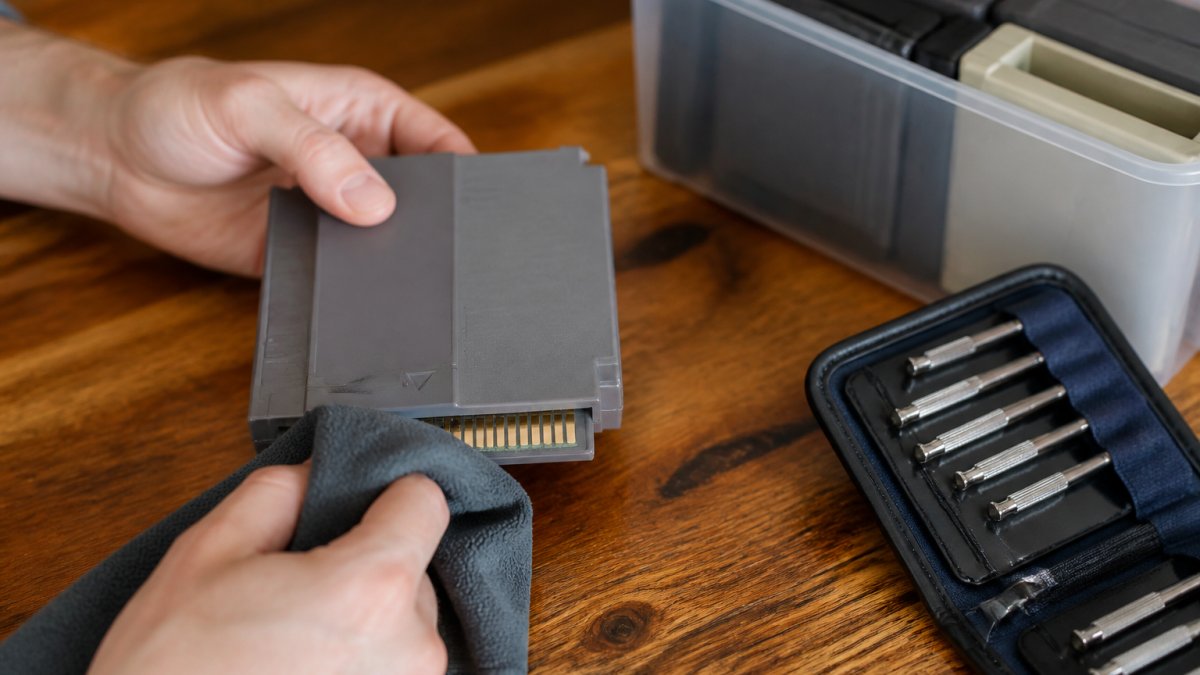
How to Clean Retro Games for Trade-In Without Damaging Labels
Cleaning retro games for trade-in is simple, but one wrong move can wreck a label and cut your offer.
Never soak a cartridge or use household cleaners or abrasive pads. The label drives value on a loose cartridge, and a torn or faded one drops it fast.
For the gold contacts, a cotton swab with a little isopropyl alcohol works well. Let it dry fully before testing.
Testing Consoles and Cartridges Before You Head to the Store
Test everything you can before you go. Power on each console, plug in a controller, and load a game. Note anything that does not work.
A few common issues to check:
- Does the console power on and show a picture?
- Do the controller buttons and sticks respond?
- Does the game save, or does it lose progress?
Be honest about problems. A store that tests hardware will find them anyway, and a surprise defect kills the deal.
Retro Game Trade-In Value Guide: What Actually Drives Your Offer
Your offer comes down to four things: demand, condition, completeness, and platform. A game nobody wants is worth little no matter how old it is; a game everyone wants, in great shape with the box, is worth far more.
Run your collection through this checklist before you walk in:
- Demand. Popular titles and cult classics hold value. Common sports and movie tie-in games usually do not.
- Condition. Clean labels and working hardware earn more.
- Completeness. Box, manual, and inserts raise the number.
Use a price tracking site to see recent sold prices, not asking prices, asking prices are wishes, sold prices are facts.
Condition Grading Standards: Loose, CIB, and Everything Between
Condition grading is where most sellers lose money without realizing it. Learn the labels before you trade, because a shop grades your item the moment it hits the counter.
- Loose: the cartridge or disc only. No box, no manual.
- CIB (Complete in Box): game, box, and manual together.
- Sealed: never opened. Rare, and priced accordingly.
Within those labels, graders look at specific defects. On a loose cartridge, the label is the biggest driver: a torn, faded, or peeling label drops the offer fast, while a clean label with sharp print holds value even if the shell is scuffed.
A loose cartridge in great shape can beat a CIB copy with water damage, grading is about the whole package.
How Market Fluctuations Move Your Offer
Retro game values are not fixed. They move with supply, demand, and the news cycle, and a shop's offer reflects where the market sits that week.
A few patterns are worth knowing:
- Anniversary and re-release bumps. When a classic gets a remaster, a sequel, or a documentary feature, demand for the original often spikes, then settles.
- Seasonal swings. Buying picks up around the holidays and slows in late winter. Offers tend to follow.
- Supply shocks. A large collection hitting the local market can soften prices for common titles in that region for a while.
None of this means timing the market like a stock trader. Check recent sold prices before accepting an offer, and understand that a shop quoting lower than an online listing is pricing in its own risk, testing time, and resale margin, not lowballing you.
Trade-In Credit vs. Cash: Which Payout Makes Sense for You
Store credit almost always pays more than cash: a shop can offer more credit because the money stays in the store.
Cash makes sense when you are done collecting and want the money out.
| Payout Type | Typical Advantage | Best For |
|---|---|---|
| Store credit | Higher offer, applied to a purchase | Collectors rebuilding a shelf |
| Cash | Immediate, no strings | Sellers leaving the hobby |
| Trade for specific game | Straight swap, no cash either way | Hunters chasing one title |
| Consignment | Highest potential return, slower | Rare items worth waiting on |
Pick the option that matches your goal, not the one with the biggest number on the paper. Credit you never spend is worth less than cash in your pocket.
The Best Way to Sell Retro Games You Don't Want to Trade
The best way to sell retro games depends on what you have. High-value, in-demand titles do well in a private sale. Everything else moves faster through a local trade-in.
Here is how to sort your pile:
- High value, high demand: consider a private sale for the top dollar.
- Mid value, common: trade locally for speed and no fees.
- Low value, bulk: bundle it. Nobody wants ten copies of the same sports game one at a time.
Bundling is the underrated move: a box of twenty common games is easier to move than twenty single listings, and a store can price it as a starter set for a new collector.
Spotting Reproduction Carts and Fakes Before You Trade
Reproduction carts are the biggest risk in the second-hand market right now: a repro looks close to the real thing but is a modern copy worth a fraction of an original.
Check these before you buy or trade:
- Label quality. Originals have crisp print. Repros often look slightly off or glossy.
- Screw type. Many originals use a specific screw. A mismatched screw is a red flag.
- Board inside. If you can open it, look for a modern chip where an original would have a battery or older components.
Authentication matters in both directions: you do not want to trade in a repro you thought was real, or buy one. A shop that verifies authenticity protects you on both sides of the counter.
Safety, Legal, and Tax Basics for Local Trades
Meet in a public place, bring a friend, and trust your gut, if a deal feels off, walk away. The details below keep a high-value trade safe and clean.
Safe Exchange Practices for High-Value Trades
Many police departments designate a safe exchange zone, usually a marked area in a station parking lot with cameras, for transactions arranged online. If your local department has one, use it; otherwise, a busy retail parking lot in daylight is the next best thing.
A few habits keep you safe:
- Meet during daylight in a busy, public spot with cameras
- Tell someone where you are going and when you expect to be back
- Bring a friend if you can, especially for a trade worth several hundred dollars
Payment Methods and Their Trade-Offs
- Cash: immediate and final, but verify bills for larger amounts and count in front of the buyer.
- Peer-to-peer apps: convenient, but screenshots can be faked. Confirm the payment has actually landed in your account before handing anything over, not just that the app shows a pending notification.
- Store credit: the safest option inside a shop, because the transaction is on the store's books.
A common scam is the overpayment or 'accidental' extra payment followed by a request to refund the difference. Decline and walk away. Legitimate buyers do not send you money by mistake and ask for it back in cash.
Legal Basics: What You Can and Cannot Resell
Legally, you are generally free to resell games you bought, but you cannot sell copies you made. Two practical points most guides skip:
- First-sale doctrine. Once you lawfully own a physical copy, reselling that copy is generally permitted. That is why used game stores exist.
- Reproductions. Selling a repro as an original is a misrepresentation problem, not just a collector problem. Disclose what you have.
If you are trading in a console that has a digital account linked to it, sign out and remove your payment methods before the trade. That is a security step, not a legal one, but it belongs in the same conversation.
Tax Basics for Occasional and Regular Sellers
For taxes, the IRS guidance on hobby versus business income is worth reading if you sell often. The short version:
- Occasional sellers selling personal items at a loss generally have little to worry about. Selling your old collection for less than you paid is not a taxable gain.
- Regular sellers who buy specifically to resell are running a business, and may need to track income and expenses and report profit.
- Payment platforms may issue a Form 1099-K once your gross payments through that platform cross the reporting threshold. The threshold has changed in recent years, so check the current figure rather than relying on an old number.
When in doubt, talk to a tax professional. One consultation usually costs less than getting it wrong.
Conclusion: Trade Locally, Play Forever
Building a collection should be fun, not a shipping logistics project. Next time you sort through a box of old cartridges, skip the listing fees and packing tape and bring it to a shop that tests what it buys and stands behind what it sells.
Our trade-in program turns your shelf into credit, our team tests every console and game before it hits the floor, and our Canton storefront is built for the local retro gaming community, not just a transaction.
Frequently Asked Questions
How do local game stores determine the trade-in value of retro games?
Local stores look at current market value, condition, and demand. A loose cartridge in good shape earns less than a complete-in-box copy with manual and case. Rare titles and popular franchises like Pokémon or Zelda often command higher trade-in credit. Staff also check that the game is authentic and fully tested before making an offer.
Is it better to trade in retro games for store credit or cash?
Store credit almost always pays more because the shop keeps the money in-house. If you plan to buy other retro games or consoles, credit stretches your dollar further. Take cash only when you need the money for something outside the hobby.
What should I bring when trading in retro games at a local store?
Bring the games, consoles, and any original boxes, manuals, or inserts you still have. Include power supplies and controllers for consoles. A photo ID may be required for cash payouts. If you have high-value items, call ahead so staff can set aside time to test and grade everything properly.
How can I avoid getting lowballed on my retro game trade-in?
Clean your games, test them first, and know rough market values from price charting sites. Bundle complete sets together, since CIB copies earn more than loose carts. Ask how the store calculates offers and whether credit pays more than cash. A shop that explains its grading is usually a fair one to work with.