
 how-to
Where to Sell Graded Pokemon Cards in Ohio: 2026 Guide
Table of Contents
- Where to Sell Graded Pokemon Cards in Ohio: Your Selling Options
- How to Price Graded Pokemon Cards Before You Sell
- Sell Graded Pokemon Cards Locally: Ohio Card Shops and Buyers
- Best Places to Sell Pokemon Cards Online
- How to Sell Pokemon Cards Safely: In-Person and Shipping
- Ohio Card Shows and Trading Communities
- Frequently Asked Questions
Last Updated: October 5, 2026
Where to Sell Graded Pokemon Cards in Ohio: Your Selling Options
If you have been wondering where to sell graded Pokemon cards in Ohio, the answer comes down to three routes: local card shops, online marketplaces, and card shows. Each pays differently, and the gap between them is wider than most sellers expect. At Retroaholics, we talk with collectors every week who are sitting on PSA and CGC slabs and have no idea what they are actually worth.
A graded card is a trading card that has been authenticated, assigned a numerical condition score, and sealed inside a tamper-evident plastic holder called a slab by a third-party grading company such as PSA or CGC. The grade drives the price more than anything else about the card.
What Counts as a Graded Card
Graded cards carry a label showing the company, the grade, and a certification number you can look up. A PSA 10 and a PSA 8 of the same card can sit in completely different price brackets, which is why the slab matters more than the raw card inside it. If your card is still in a penny sleeve and top loader, you are selling a raw single, not a graded one, and buyers will price it accordingly.
How to Price Graded Pokemon Cards Before You Sell
Pricing starts with the certification number, not the card name. Look up your slab on the grading company's verification tool to confirm the grade and check for any population data. Then pull recent sales, not asking prices.
Reading Recent Sales and Comparable Sales
Sold listings tell you what buyers actually paid. Active listings tell you what sellers hope to get, which is often 20 to 30 percent higher and meaningless for your purposes. Filter your search by the exact grade, the grading company, and the past 60 to 90 days. A CGC 9.5 and a PSA 9 are not comparable sales even when the card is identical.
Three data points change your number fast:
- The grading company (PSA slabs usually sell for more than CGC on the same grade)
- The grade itself (a 10 versus a 9 can double the value)
- The card's era (vintage chase cards hold value differently than modern pulls)
Sell Graded Pokemon Cards Locally: Ohio Card Shops and Buyers
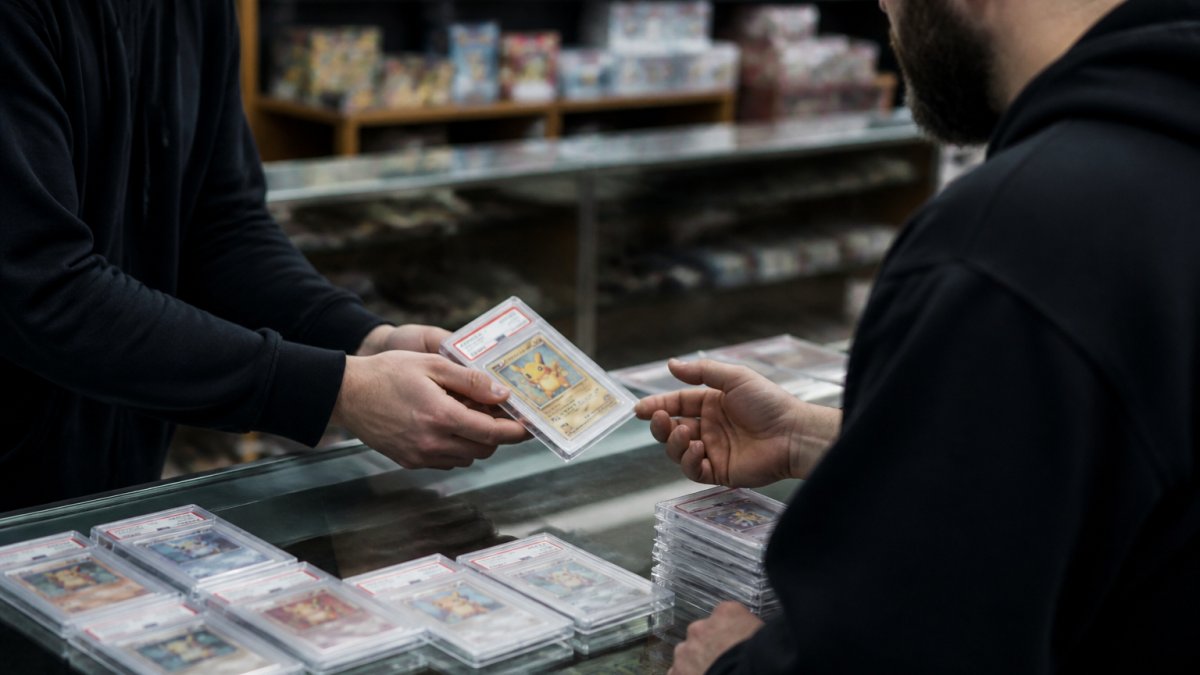
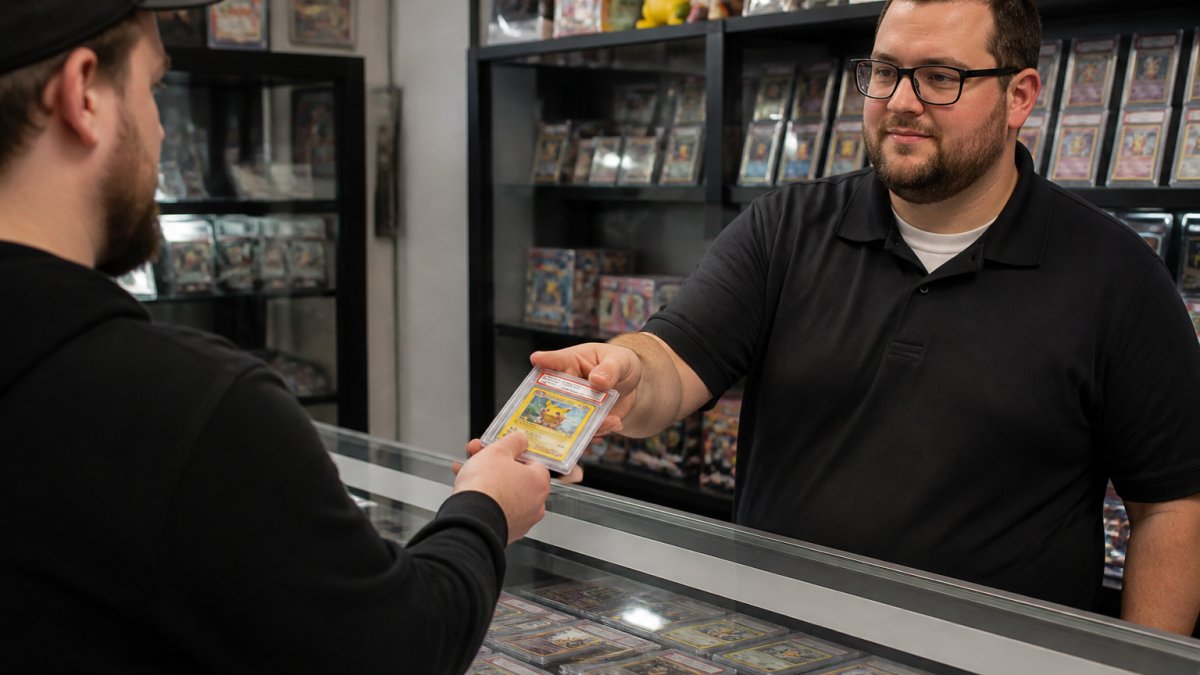
Local game stores and collectibles shops are the fastest route to cash, and they are the best fit if you want the deal done in one visit. You will typically walk out with payment the same day, no shipping, no seller fees, no waiting on a buyer to pay.
The trade-off is that a shop pays wholesale, because it has to resell your slab at a profit. Expect an offer below full market value. That is not a lowball; it is the cost of speed and certainty.
A Region-by-Region Look at Where Graded Slabs Move
Most guides mention a shop or two and stop.
Northeast (Cleveland, Akron, Canton, Youngstown), The densest concentration of card shops and the deepest collector base.
Central (Columbus and suburbs), A large, younger collector market driven by the university population. Shops here often lean modern and may pay stronger on recent chase cards than on vintage.
Southwest (Cincinnati, Dayton), A mix of established vintage buyers and modern-focused stores.
Northwest (Toledo, Lima, Findlay), Fewer dedicated card shops, so graded buyers are more spread out. Card shows and regional collector meetups often beat a single store visit here.
Southeast and rural areas, Dedicated buyers are scarce. For most sellers outside the metros, an online sale or a trip to a larger-market show will net more than a local offer.
How to Vet a Local Buyer Before You Hand Over a Slab
Not every shop that buys cards is set up to price graded slabs correctly. Run these checks:
- Ask if they buy graded cards specifically. A store that only deals in raw singles may still make an offer, but it will likely be a rough guess.
- Ask how they price. A transparent buyer will tell you the percentage of recent comps they pay and show you the sold listings they used.
- Ask about payment method and limits. Many shops pay cash up to a threshold and switch to check or electronic transfer above it. Know which before you agree on a number.
- Confirm they can verify the cert. A serious graded buyer will look up your certification number on the grading company's tool in front of you.
What to Bring to a Local Appraisal or Offer
Walk in prepared and the conversation goes faster and better. Bring the following:
- Your slabs, sleeved and out of direct sunlight
- The certification numbers written down or photographed
- Your own comp research (recent sold listings for each grade)
- A list of what you paid, if you have it
- Photo ID if the buyer requests it for a large cash transaction
Ask directly how the shop prices graded cards. A good buyer will explain the percentage of market they pay and show you the comps they used.
Best Places to Sell Pokemon Cards Online
Online marketplaces reach the largest pool of buyers, and that usually means the highest gross price. The catch is everything that comes after the sale: seller fees, shipping, insurance, and the risk of a return.
The main online routes are auction-style listings, fixed-price listings, and dedicated collector marketplaces. Auctions work well for rare, high-demand slabs because competitive bidding can push a card past its recent comps. Fixed-price listings suit cards with a stable, well-documented value where you already know your number.
The Main Online Routes, Compared
General auction marketplaces. The widest buyer pool and the strongest prices on scarce, high-demand slabs.
Fixed-price marketplaces. Better for slabs with a clear, stable comp. You set the number and wait. The same fee structure applies, but you control the price instead of the bidding.
Dedicated collector marketplaces and forums. Lower fees and a buyer pool that already understands grading, which reduces the "what is this worth" haggling.
Social media and community groups. No marketplace fee, but you carry all the risk: no buyer protection, no dispute process, and payment fraud is real. Best reserved for low-value slabs or buyers you can verify.
Local consignment and trade-in programs. Some shops and community hubs will sell on your behalf for a cut. You give up a percentage but skip the listing, packing, and shipping work.
Comparing Local Cash Offers with Online Net Proceeds
The number that matters is net proceeds, not sticker price. A local cash offer of $400 today can beat an online sale at $500 that nets $430 after fees and shipping, especially once you factor in the weeks of waiting and the risk of a return.
Run the math on your own slab before you decide. Start with your expected online sale price, then subtract:
- Marketplace final-value fee, a percentage of the sale price
- Payment processing, a smaller percentage on top
- Shipping, a tracked, insured box for a graded slab is not cheap
- Insurance, priced against the declared value
- Your time, listing, answering messages, packing, and handling any dispute
What is left is your true online number. Compare that to the local cash offer, not to the online asking price.
| Factor | Local Shop Cash Offer | Online Marketplace Sale |
|---|---|---|
| Payout speed | Same day | Days to weeks |
| Seller fees | None | Yes, percentage of sale |
| Shipping and insurance | None | Your cost |
| Price vs. market | Below market | At or near market |
| Return risk | None | Buyer can dispute |
| Best for | Fast, certain cash | Maximum gross price |
How to Sell Pokemon Cards Safely: In-Person and Shipping
Safety is about meeting in public and documenting everything. For local sales, meet at a card shop, a card show, or another public place with cameras and foot traffic. Never invite a stranger to your home for a high-value slab.
For online sales, protect yourself before the card leaves your hands:
- Photograph the slab and cert number before packing
- Ship with tracking and signature confirmation on high-value cards
- Insure the package for full market value
- Keep your receipt and tracking number until the buyer confirms delivery
Shipping and Insuring Graded Slabs
Graded slabs need rigid protection. Use a box, not a bubble mailer, for anything valuable. Wrap the slab in bubble wrap, secure it so it cannot shift, and choose a shipping service with tracking and insurance that covers the full declared value. If the slab is worth more than you are willing to lose, insure it for the number you would need to replace it.
Ohio Card Shows and Trading Communities
Card shows put you in a room with multiple buyers at once, which is the single best way to test the market on a graded slab. You can collect several offers in an afternoon and take the highest, or trade toward something you actually want.
Community matters here too. Local trading groups and shop events connect you with collectors who value the same cards you do, and those relationships often produce better offers than a cold online listing.
Selling graded Pokemon cards in Ohio does not have to mean guessing at value or trusting a stranger online. Whether you want fast local cash or the highest possible net price, the right route depends on your card, your timeline, and your tolerance for risk.
Frequently Asked Questions
Should I sell graded Pokemon cards to a local card shop or online?
Local card shops pay cash on the spot and skip shipping, but offers usually land below market value to cover resale margin. Online marketplaces reach more buyers and often net more, but you pay seller fees and handle packing and shipping. A common approach is to get a local cash offer first, then compare it against the expected online payout after fees. If the gap is large, online wins; if it is small, the convenience of a local sale may be worth it.
How do I price a graded Pokemon card before selling it?
Look up recent sales of the same card in the same grade, not just the same card. A PSA 10 can sell for several times what a PSA 8 brings. Check completed sales on marketplaces, note the date, and average the last several results. Then subtract seller fees and shipping to estimate your net proceeds. Condition, grade, and buyer demand all move the number, so recheck pricing close to the day you list.
What should I bring when selling graded Pokemon cards in person?
Bring the slabs in protective sleeves or a case, a photo ID, and any grading paperwork or certificates that came with the cards. If you have a price in mind, write down recent comparable sales so you can discuss the offer with real numbers. For high-value singles, call ahead to confirm the shop buys graded cards that day and ask whether an appointment is needed.
How can I avoid scams when selling graded Pokemon cards?
For in-person sales, meet in a public place like a card shop or police-designated exchange zone, and never hand over a card before payment clears. For online sales, use platforms with buyer and seller protection, keep tracking numbers, and insure high-value shipments. Be wary of buyers who push you to move the deal off-platform or who offer payment methods with no recourse, such as gift cards or peer-to-peer transfers with strangers.