 blog
blog
Best Budget Alternatives to High-End Game Protectors
Table of Contents
- Why Budget Game Protectors Are Worth a Second Look
- Budget Video Game Box Protectors vs. Premium Options: A Side-by-Side Comparison
- Game Protector Thickness and Material: What You Actually Get for Less
- Fit Guidance: Choosing the Right Size for Cartridge and Disc-Based Games
- DIY Video Game Box Protection: When It Makes Sense and When It Doesn't
- Protection Testing and Long-Term Durability: What Budget Options Handle Well
- Archival Safety and Moisture Management for Retro Game Boxes
- Conclusion: Getting the Most Protection for Your Money
- Frequently Asked Questions
Last Updated: October 12, 2026
Why Budget Game Protectors Are Worth a Second Look
Here is the part most collectors get wrong: a protector's job is to sit between your box and the world. It is not jewelry.
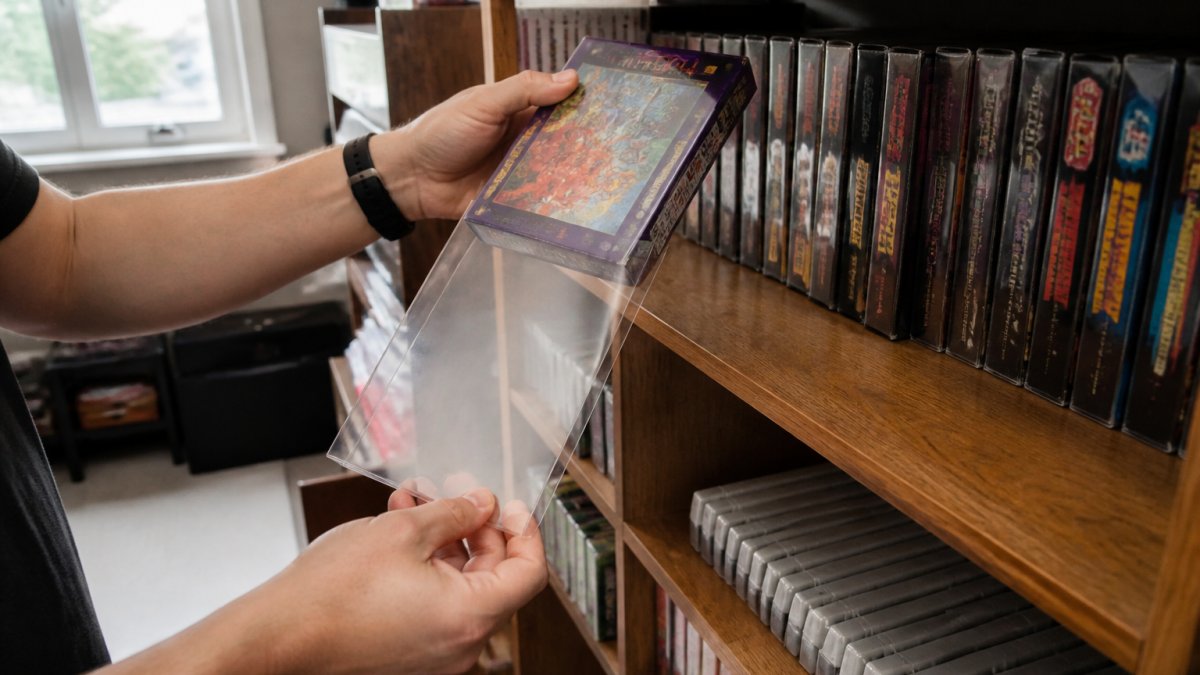
Box damage is the quiet killer of collection value. Sun fade, shelf scuffs, and humidity all work slowly, and by the time you notice, the damage is permanent.
Below, we break down materials, fit, and durability so you can protect a whole shelf without overspending on any single box.
Budget Video Game Box Protectors vs. Premium Options: A Side-by-Side Comparison
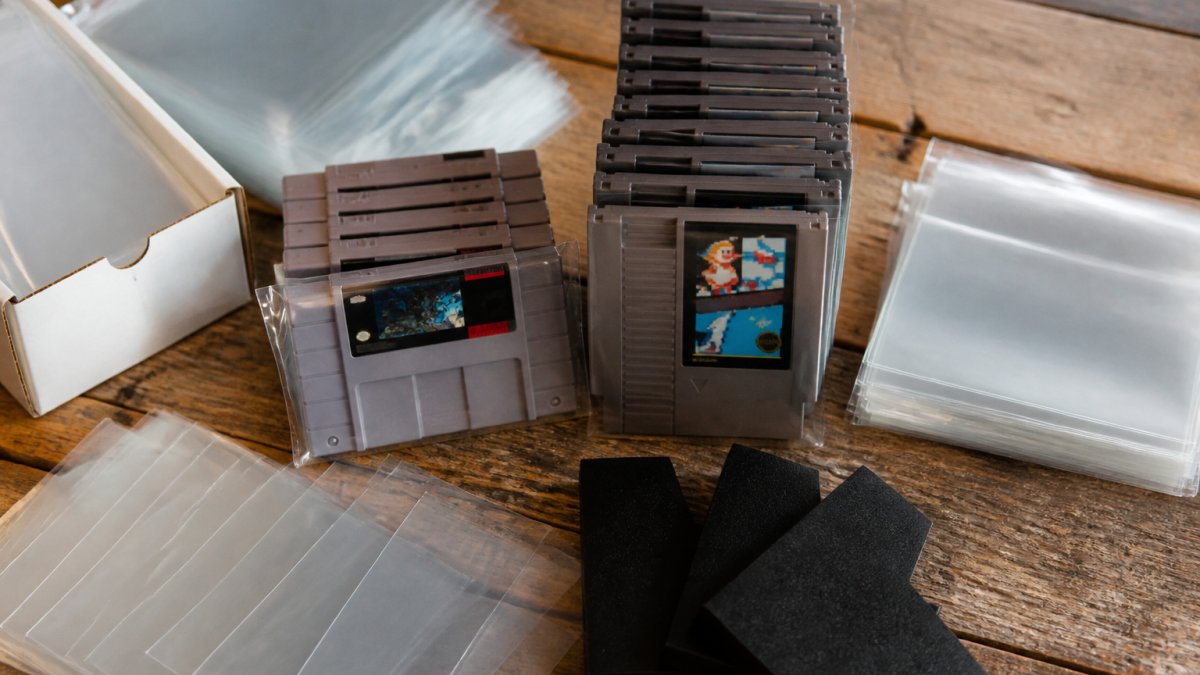
Budget video game box protectors typically use thinner PET, polypropylene, or acid-free card stock, while premium options use thicker acrylic or rigid PET. The real difference is not whether a box is protected, it is rigidity, clarity, and how the protector behaves when you stack, handle, or display the box. For most shelf collections, budget protectors win on value.
Here is how the two tiers stack up on the things that actually matter. Treat the numbers below as typical ranges, not universal specs, since every seller cuts its own sizes:
| Factor | Budget Protector | Premium Protector |
|---|---|---|
| Typical material | 0.2-0.4 mm PET, polypropylene, or acid-free card stock | 0.5-1.0 mm rigid PET or acrylic |
| Thickness feel | Flexes between two fingers | Holds its shape when lifted by one corner |
| Fit | Standard sizes with some slack, sold in packs | Custom-molded, snug, often sold individually |
| Display clarity | Good, may show slight haze or seams | Excellent, near-glass clarity |
| Stackability | Limited, boxes can bow under weight | High, supports moderate stacking |
| Seam construction | Folded or taped seams | Welded or interlocking seams |
| UV resistance | Rarely rated | Sometimes rated, still not full UV block |
| Best for | Full shelves, playable copies, common titles | Graded pieces, grails, display cases |
Total Cost Over a Full Collection
The math is simple. Premium protectors make sense for a handful of grail boxes you display. Budget protectors make sense for the other two hundred.
A common pattern among collectors is that a single premium protector costs several times what a budget protector costs, and the gap widens when you buy budget protectors in multi-packs. If you protect a large collection, the per-box savings add up fast. Spending premium money on every common title means less budget for actual games. That trade-off rarely pays off.
A practical way to think about it: split your collection into three tiers.
- Display tier, grails, sealed copies, and anything you plan to grade. Premium protectors here.
- Shelf tier, the bulk of a collection. Budget protectors in bulk packs.
- Storage tier, duplicates, loose commons, trade stock. Budget protectors or acid-free card sleeves.
Where Budget Protectors Actually Match Premium
It is worth being specific about what you give up when you go budget, because the list is shorter than most collectors assume:
- Dust and light blocking, both tiers block the same everyday dust and indirect light.
- Shelf scuff protection, both tiers keep boxes from rubbing against each other.
- Handling wear, both tiers absorb the fingerprints and edge wear from normal handling.
What you give up is rigidity, stackability, and the polished look of a thick acrylic case on a display shelf. If those three things do not matter for a given box, the budget option is the better buy.
Game Protector Thickness and Material: What You Actually Get for Less
Game protector thickness and material decide how much abuse a box survives. Thicker gauge means more rigidity and better stackability, but it also costs more and takes up more shelf space. Match the material to how you store and handle the box.
Plastic, TPU, and Cardboard: Matching Material to Use Case
Plastic protectors are the budget workhorse. They are clear, affordable, and fine for boxes that sit on a shelf.
TPU is a flexible plastic that resists cracking and handles handling well. It is a good middle ground for boxes you take down often.
Cardboard and card stock are the cheapest option and offer basic scratch and dust protection. They will not stop a drop, but they cost the least.
- Plastic: best all-around value for shelf storage
- TPU: best for boxes you handle regularly
- Cardboard: best for tight budgets and short-term storage
A common mistake is buying the thickest protector available for every box. If a box never leaves the shelf, that rigidity is wasted money.
Fit Guidance: Choosing the Right Size for Cartridge and Disc-Based Games
Fit is where budget protectors live or die. A protector that is too loose lets the box slide and scuff. One that is too tight can bow the cardboard or split a seam. Measure before you buy, every time.
Most buyers get this wrong because they measure the game case inside the box instead of the box itself. The box is what the protector has to fit, and box dimensions vary by publisher, region, and print run even for the same title.
Sizing by Game Format
Protector sizes cluster around a few common formats. Treat these as starting points, then verify against the actual box in your hand:
- Cartridge boxes (classic Nintendo, Sega, Atari), small, thick, and often close to square. These need a deeper protector than disc-based games because the box has more depth.
- Standard disc cases (PlayStation, Dreamcast, Xbox), wider and flatter. The protector is usually a thin sleeve sized to the jewel or keep case footprint.
- Oversized and special editions, collector's editions, big-box PC releases, and steelbook bundles often fall outside standard sizes. These usually need a custom or oversized protector, and budget options are scarcer here.
- Sealed and graded boxes, a sealed box is slightly thicker than an opened one because of the shrink wrap. Size up a notch if you plan to keep a box sealed.
How to Measure and What Tolerance to Leave
A simple routine that avoids most purchase mistakes:
- Measure length, width, and depth of the box, not the case inside it.
- Measure at the widest point, including any shrink wrap or price stickers.
- Add a small tolerance so the box slides in without force. A common rule of thumb is a couple of millimeters of slack on each dimension.
- Check whether the protector is sized for the box or the bare case. Sellers are not always clear about this, and it is the single biggest source of returns.
- Test-fit one protector before opening a whole pack.
Handling Unusual Editions
Some boxes do not fit any standard size. For those, you have three realistic options:
- Buy an oversized protector and accept a little slack, then pad the gap with acid-free tissue.
- Look for a seller that lists exact interior dimensions rather than a game name.
- Skip the protector and store the box in a rigid, acid-free archival box instead.
Getting this right matters more than the brand on the label. A cheap protector that fits beats an expensive one that does not.
DIY Video Game Box Protection: When It Makes Sense and When It Doesn't
DIY video game box protection works for low-value boxes and short-term storage. It falls short for anything you plan to display or keep for decades. The trade-off is your time versus the cost of a real protector.
You can cut cardboard sleeves or repurpose clear plastic from packaging. It is cheap and it does the basic job of blocking dust and light.
Where DIY fails: it does not seal out moisture well, it looks unfinished on a shelf, and it offers no real impact protection. For a rare or valuable box, that is a bad bet.
Protection Testing and Long-Term Durability: What Budget Options Handle Well
Budget protectors handle everyday wear well and heavy impact poorly. They stop the scratches, scuffs, and dust that cause most long-term damage. They will not save a box from a hard drop or a crush.
What they do well:
- Block dust and light that fade and dull artwork
- Absorb shelf scuffs from sliding boxes
- Resist everyday handling wear
What they do not do:
- Survive a serious drop
- Support heavy stacking without bowing
- Seal against humidity on their own
For a collection that lives on a shelf, that first list covers almost everything. Save the heavy-duty protection for boxes that travel or get displayed at events.
Archival Safety and Moisture Management for Retro Game Boxes
Moisture is the number one enemy of cardboard game boxes. Damp air softens paper, encourages mold, and warps boards over time. Budget protectors help, but they are not a full climate-control system.
Keep boxes in a stable, dry space away from basements and exterior walls. Add a desiccant pack in humid rooms, and leave a little airflow rather than sealing boxes tight. Direct sunlight is just as damaging, so keep shelves out of the sun.
A simple routine goes a long way:
- Store at a steady room temperature
- Use silica gel packs in humid climates
- Check boxes once a season for warping or spots
- Rotate boxes so none sit in direct light
Budget protection plus good storage habits matches what premium sleeves do, at a fraction of the cost.
Conclusion: Getting the Most Protection for Your Money
Protecting a full collection is a budget question, not a brand question. Budget protectors handle the everyday threats, and smart storage covers the rest. Reserve premium sleeves for the few boxes that truly earn them.
At Retroaholics, we help collectors in Canton and North Canton rebuild their childhood shelves with tested, quality-verified games and consoles. Bring in a collection to trade, or stop by the store to see how we care for the boxes we sell. Shop with Retroaholics and give every game in your collection the protection it deserves.
Frequently Asked Questions
Are budget game box protectors as good as premium protectors?
For most collectors, yes. Budget protectors made from 0.4mm to 0.5mm PET or polypropylene shield against scratches, dust, and light scuffs just as well as thicker premium options. The trade-off is rigidity: thinner plastic flexes more under stacking pressure. If you store boxes upright on a shelf and handle them carefully, budget protectors hold up fine. If you stack heavy boxes or ship items frequently, spending more on thicker material pays off.
What should I look for in a budget game protector?
Focus on three things: material type, thickness, and fit. PET plastic offers the best clarity and scratch resistance for display. Thickness between 0.4mm and 0.5mm balances protection with cost. Fit matters most because a loose protector lets dust in and a tight one bends box corners. Measure your game box dimensions before buying and match them to the protector's listed size. Avoid protectors with rough edges or chemical odors, which signal low-grade material.
Can I use one protector for different game box sizes?
Rarely well. Cartridge boxes from the NES and SNES eras have different footprints than disc-based PlayStation or Sega CD cases. A protector sized for a standard DVD case will leave gaps around a smaller cartridge box, letting in dust and moisture. Buying size-specific protectors costs slightly more upfront but prevents the sagging and misalignment that universal-fit options cause. Measure each game format you collect and order accordingly.
Do game protectors prevent scratches, dust, and dents?
They prevent scratches and dust effectively. Dents depend on thickness and storage conditions. A 0.4mm protector absorbs light shelf wear and keeps dust off cardboard surfaces. Heavier impacts still transfer through thin plastic. For dent-prone storage, combine protectors with upright shelving and avoid stacking more than three or four boxes. Moisture control matters too: add silica gel packets to closed storage bins to prevent mold and warping over time.