 blog
blog
Is Buying Refurbished Retro Consoles Worth It?
Table of Contents
- Refurbished vs Used Gaming Consoles: What Actually Separates Them
- The Real Risks Inside Aging Retro Hardware
- How to Test a Retro Console Before Buying
- Best Places to Buy Retro Consoles Without Getting Burned
- When Refurbished Retro Consoles Are Worth It (and When They're Not)
- Why a Local, Tested Storefront Changes the Math on Refurbished Retro Consoles
- Conclusion
- Frequently Asked Questions
Last Updated: September 28, 2026
Refurbished vs Used Gaming Consoles: What Actually Separates Them
A refurbished retro console has been inspected, repaired, cleaned, and tested before resale, while a used console is sold as-is with no restoration work. That single difference decides whether you get a working console or someone else's problem. This guide breaks down the real risks inside aging hardware, how to test a console before you pay, and when refurbished retro consoles are worth it.
Most shoppers treat "refurbished" and "used" as the same thing. They are not. A used console is whatever the previous owner left behind: dust, worn capacitors, a mushy d-pad.
The Refurbishment Process, Step by Step
Professional refurbishment follows a repeatable sequence, not a quick wipe-down.
- Disassembly and internal cleaning of dust, debris, and corrosion
- Capacitor health check on the board and power supply unit
- Disc drive or cartridge slot inspection and laser replacement if needed
- Controller and port testing across all inputs
- Firmware check and region-locking verification
- Cosmetic condition grading and shell cleaning
- Final performance testing with real game media
Cost, Warranty, and Longevity Compared
Refurbished hardware costs more because labor went into it. That premium buys warranty coverage and a longer expected lifespan. Used consoles are cheaper upfront but carry no guarantee, and vintage electronics fail without warning.
| Factor | Refurbished | Used (As-Is) |
|---|---|---|
| Upfront cost | Higher | Lower |
| Warranty coverage | Usually included | None |
| Testing protocols | Full inspection | None |
| Expected lifespan | Longer | Unknown |
| Return policy | Typically offered | Rarely offered |
The Real Risks Inside Aging Retro Hardware
The biggest threat to a vintage console is not visible damage but component degradation that happens silently over decades, affecting every original manufacturer's hardware. Most online listings were never opened, so the seller genuinely does not know what is inside.
Capacitor Health and Power Supply Degradation
Electrolytic capacitors contain a liquid electrolyte that slowly dries out and can leak onto the board. This is the most common hardware failure in vintage electronics, and it is invisible from outside. A leaking capacitor can corrode traces and turn a $40 repair into a $200 board-level job.
Save Batteries, Disc Rot, and Other Silent Killers
Capacitors are not the only aging component. Cartridge systems from the 8-bit and 16-bit eras use a coin-cell battery for save data, rated for roughly five to ten years, so most originals are long dead. A dead battery does not stop the game from booting, so it is easy to miss: your save simply disappears when you power off. Ask whether the save battery was replaced and with what.
Authenticity vs Reproduction Parts
Not all repairs are equal. A replacement shell, third-party controller, or reproduction power adapter changes what you are buying. Original OEM components hold more value for collectors, while reproduction parts can affect compatibility: a repro shell may not align with original screw posts, and a cheap third-party power supply can introduce noise or voltage instability that shortens the console's life.
How to Test a Retro Console Before Buying
Testing a retro console before buying means running a real game, checking every port, and verifying the disc drive or cartridge slot under load. A five-minute boot test will not catch capacitor or drive issues.
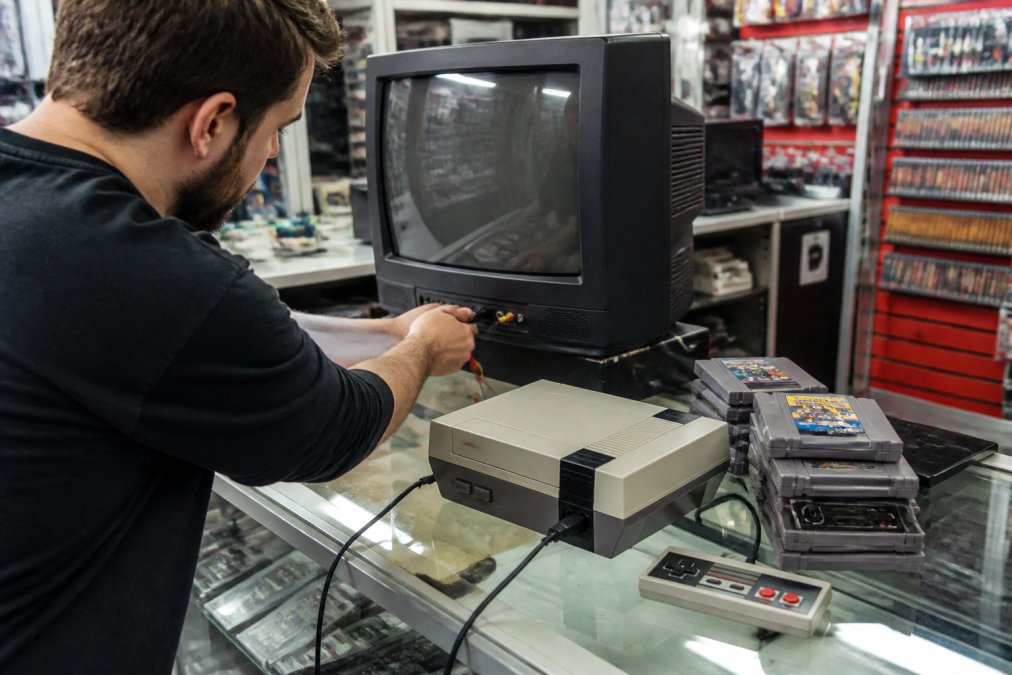
Bring or request these checks:
- Run an actual game for at least 15 minutes
- Test every controller port and memory card slot
- Listen for grinding or clicking from the disc drive
- Check video output on the connection type you will use at home
- Confirm save files write and reload correctly
Firmware, Region-Locking, and Disc Rot Checks
Region-locking determines which games a console will play. A Japanese or European unit will not run North American discs without modification, so confirm the region first.
Best Places to Buy Retro Consoles Without Getting Burned
The safest places to buy retro consoles are sellers who test hardware, offer a return policy, and can explain their inspection process. That rules out most anonymous marketplace listings.
Ranked by risk, here is how the options compare:
- Specialty retro stores: tested, warrantied, staff who know the hardware
- Local game shops with a physical storefront: you can inspect before buying
- Reputable online retro retailers: consistent quality assurance, but shipping risk
- General marketplaces: lowest prices, highest risk, no testing
- Estate sales and flea markets: occasional gems, frequent duds
When Refurbished Retro Consoles Are Worth It (and When They're Not)
The honest answer depends on three variables: what the console costs, what a professional refurbishment would cost on top of it, and what your time is worth. Here is the actual decision framework.
The DIY vs. Professional Refurbishment Math
If you already own a console, or can buy a cheap untested one, you have a third option: refurbish it yourself. Parts are usually inexpensive. A capacitor kit for a common console runs from a few dollars to around twenty depending on how many caps are involved; a save battery is a couple of dollars. A replacement laser assembly is often the priciest single part, sometimes approaching the cost of a used console.
A simple way to frame it:
- If the console is common and cheap: buying refurbished usually wins, because the labor premium is small relative to the hassle.
- If the console is rare or expensive: professional refurbishment wins even harder, because a botched DIY job destroys value that cannot be recovered.
- If you already own the tools and enjoy repair work: DIY can be the cheapest path, and the skill carries over to future purchases.
- If you are buying your first retro console: do not make it your first soldering project. Buy refurbished, then learn on a cheap spare.
Buy Refurbished If:
- You want plug-and-play reliability and a console that works on arrival
- You value a return policy and warranty coverage more than saving a few dollars
- The console is rare, expensive, or hard to replace
- You are rebuilding a childhood collection to play, not to flip
- You do not own soldering tools or have no interest in learning
Skip Refurbished If:
- You can diagnose and replace capacitors and batteries yourself
- You want a project console at the lowest possible price and accept the risk
- You are chasing a rare cosmetic variant that rarely appears refurbished
- You are buying a console you plan to modify heavily anyway, which voids most warranties
The Warranty Question
Warranty coverage is the biggest thing the refurbished premium buys, and it is worth reading the terms rather than assuming. A typical warranty covers functional failure for a defined window, often thirty to ninety days, and excludes physical damage, liquid damage, and user modification. Some sellers offer a longer window on board work. Ask what is covered, how long, and who pays return shipping.
Why a Local, Tested Storefront Changes the Math on Refurbished Retro Consoles
Buying refurbished retro consoles from a physical store removes the biggest risk in the category: not knowing what you are getting. Every console and game is tested before it hits the shelf, so disc rot and save battery issues get caught before you pay.
Conclusion
Shopping for retro hardware means navigating aging components, region-locking, and sellers who cut corners on testing. Retroaholics takes that risk off your plate with quality-verified consoles, a trade-in program, and a community of players who share the hobby. Get started and rebuild your collection with hardware you can trust.
Frequently Asked Questions
Is buying a refurbished console a good idea?
For most retro gamers, yes. A properly refurbished console has been cleaned internally, had failing capacitors and power supply components addressed, and passed performance testing before it reaches a shelf. That work costs more than a raw used unit, but it removes the most common causes of hardware failure. The key is buying from a seller who documents their testing protocols and offers warranty coverage, not just a cosmetic wipe-down.
How does a refurbished console differ from a used one?
A used console is sold as-is: whatever condition it arrived in is what you get, including worn capacitors, dusty internals, and aging save batteries. A refurbished console has been opened, inspected, cleaned, and repaired with replacement parts where needed, then tested for performance. The difference shows up in console lifespan. Used units are cheaper upfront, but refurbished units typically include a return policy and warranty coverage that used listings rarely match.
What should I look for when buying a refurbished console?
Ask about the testing process first: does the seller check capacitor health, power supply output, controller ports, and disc or cartridge reading? Confirm the warranty coverage and return policy in writing. Check whether replacement parts are OEM components or third-party reproductions, since that affects both authenticity and resale value. Finally, verify the cosmetic condition matches the listing, and test the console yourself within the return window.
Is it risky to buy refurbished retro hardware?
The risk is lower than buying untested used hardware, but it depends entirely on who did the refurbishment. Vintage electronics degrade in predictable ways: capacitors dry out, power supply units drift, and firmware or region-locking issues can limit what a console plays. A seller with documented testing protocols and a clear return policy removes most of that risk. A seller who only describes an item as 'tested and working' without details does not.