
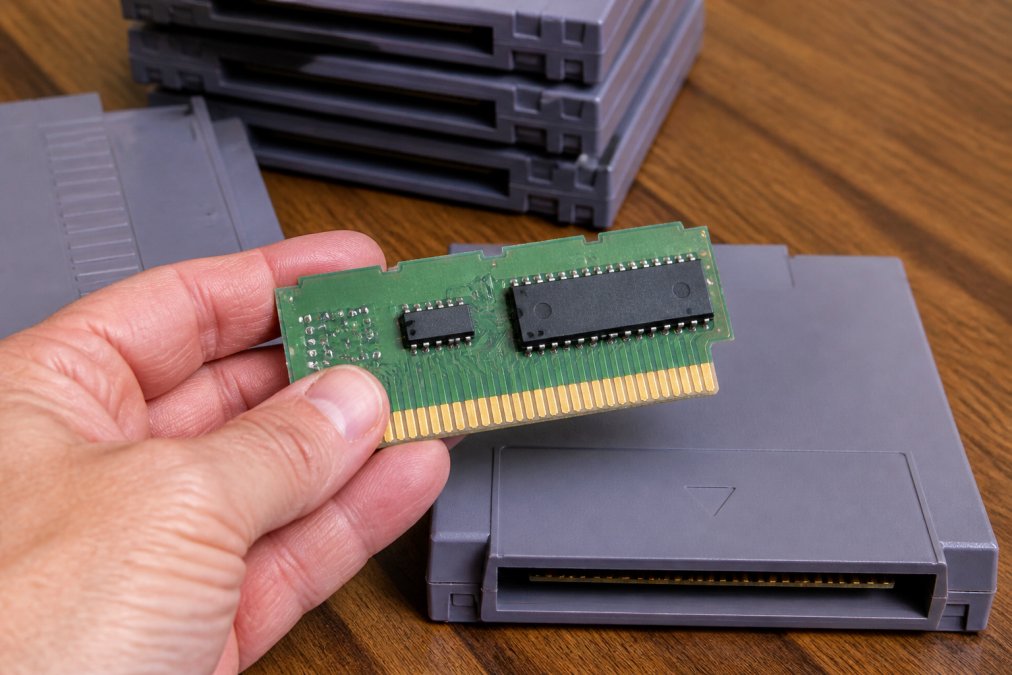
 ultimate-guide
Board Stamps Matter for Game Value
Table of Contents
- Why Board Stamps Matter for Game Value
- How to Verify Retro Game Authenticity
- Identifying Fake Retro Game Cartridges
- How to Open Game Cartridges Safely
- Board Stamps and Collection Grading Standards
- Impact on Resale Value and Trading
- Protecting Your Collection
- Frequently Asked Questions
Last Updated: September 25, 2026
Why Board Stamps Matter for Game Value
Understanding board stamps game value requires recognizing that they serve as the primary authentication marker for retro game cartridges and boards. These small printed or embossed marks, often featuring manufacturer logos, serial numbers, or production dates, tell the complete story of a game's origin, authenticity, and condition. A single board stamp can mean the difference between owning a legitimate collectible and holding a reproduction that's worth a fraction of the original.
The stamps you find on circuit boards aren't decorative. They're proof of manufacture. When you're evaluating your collection or considering a purchase, the board stamp is your first line of defense against counterfeits. A legitimate Nintendo cartridge from 1985 carries specific manufacturing marks that counterfeiters struggle to replicate accurately. The quality of the printing, the exact placement, even the wear patterns tell you whether you're holding an authentic piece of gaming history or a well-made fake.
Understanding board stamps transforms how you approach collecting. Instead of relying solely on external appearance, which reproduction cartridges have gotten disturbingly good at mimicking, you're examining the actual manufacturing evidence. This knowledge protects your investment and connects you to the real history of these games. The board stamps represent the moment these games left the factory, and they remain your most reliable witness to that moment decades later.
How to Verify Retro Game Authenticity
Verifying retro game authenticity starts with examining the board stamp under magnification, looking for manufacturing details that match documented specifications for that specific cartridge revision. The board stamp includes the manufacturer name, circuit board revision number, production date code, and often a factory identifier. Each legitimate manufacturer, Nintendo, Sega, Atari, and others, used consistent formatting and printing techniques that changed over time as production methods evolved.
Begin by researching the specific cartridge you're examining. Authentic games have documented board stamp variations based on when they were manufactured. A Super Mario Bros. cartridge from 1985 will have different board markings than one from 1988. The font, the ink quality, the placement of numbers, these details matter. Counterfeiters typically use a single reproduction master, which means every fake copy looks identical. Authentic cartridges from different production runs show subtle variations that reflect real manufacturing changes.
Next, examine the physical condition of the board stamp itself. Authentic stamps from the 1980s and early 1990s show age-appropriate wear. The ink may be slightly faded or show uneven fading patterns based on how the cartridge was stored. A board stamp that looks pristine on a cartridge claiming to be from 1985 raises immediate questions. Reproduction stamps are often too sharp, too uniform, or printed with inks that don't match the aging patterns of original manufacturing.
The location of the stamp matters as much as its appearance. Each manufacturer placed stamps in consistent locations on their boards. If a board stamp appears in an unusual location compared to documented authentic examples, that's a red flag. Many collectors maintain reference collections of authentic boards specifically to compare stamp placement and appearance with questionable cartridges.
Identifying Fake Retro Game Cartridges
Identifying fake retro game cartridges requires understanding the specific weaknesses in reproduction processes. Counterfeits have improved dramatically over the past decade, but they still leave detectable traces when you know what to examine. The board stamp is your most reliable indicator because it's the hardest component to fake convincingly.
Common Red Flags in Reproduction Games
Reproduction cartridges often display board stamps with printing inconsistencies that reveal their counterfeit nature. The ink may be too dark, too light, or show color separation issues that never appeared in original manufacturing. Authentic board stamps from the 1980s were printed with specific equipment that produced consistent results. Modern reproduction processes, even when attempting high quality, often produce slightly different results because the printing technology has changed.
Check the font weight and clarity of the board stamp text. Authentic Nintendo cartridges from the NES era used specific typefaces with consistent letter spacing and weight. Reproduction stamps sometimes show subtle differences in how letters connect or how numbers are formed. Under magnification, these differences become obvious. The letter "R" might have slightly different proportions, or the numbers might be spaced differently than the original.
Look for evidence of multiple board stamp variations within the same production run. Authentic cartridges show this naturally because manufacturers didn't change their stamp dies with every single board. They'd use a stamp until it wore out, then create a new one. This means you'll see slight variations in darkness, sharpness, and wear patterns across authentic cartridges from the same year. Reproduction cartridges, made from a single master, show no such variation.
Examine whether the board stamp matches the cartridge shell condition. A cartridge with a pristine shell but a worn, faded board stamp is suspicious. The opposite, a heavily worn shell with a sharp, clear board stamp, is equally questionable. Authentic cartridges age together. The plastic shell and the internal board experience the same environmental conditions over decades.
How to Open Game Cartridges Safely
Opening game cartridges safely requires specific tools and careful technique to avoid damaging the board, the stamp, or the cartridge shell itself. Most retro game cartridges use proprietary screws that don't fit standard screwdrivers. Nintendo cartridges famously used security screws specifically designed to prevent casual opening. You'll need a security bit set that matches your specific cartridge type.
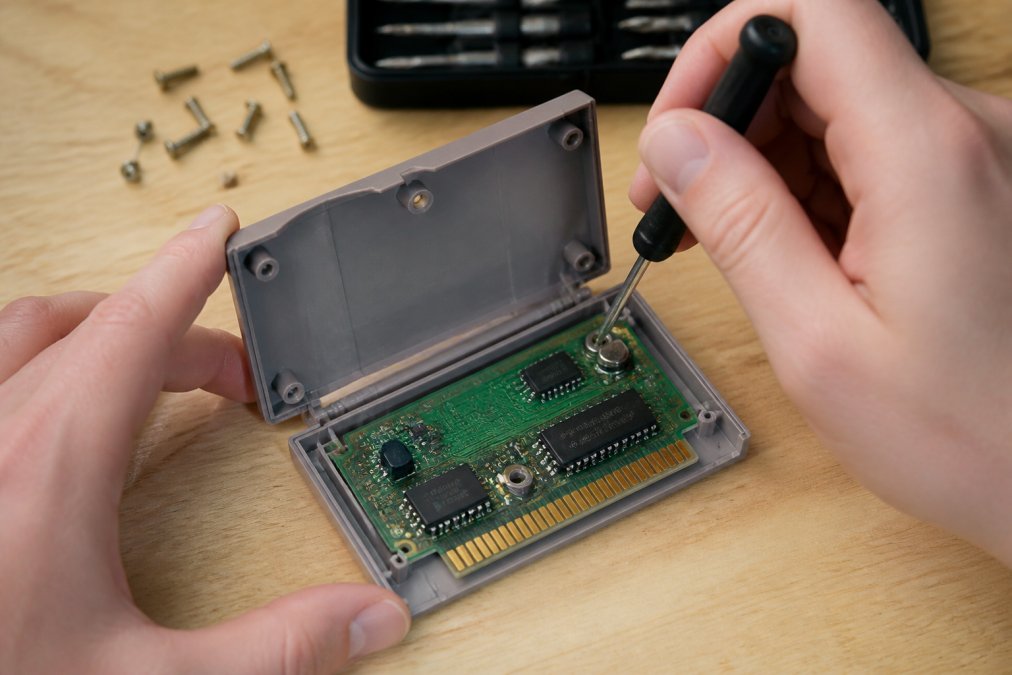
Start by identifying the screw type used in your cartridge. Different manufacturers and different eras used different security screws. Once you have the correct bit, apply steady, even pressure while turning. Rushing this step can strip the screw or damage the plastic housing. Work slowly and deliberately. If you feel resistance, stop and verify you have the correct bit.
After removing the screws, gently separate the shell halves. The circuit board is typically glued or held in place with adhesive. Don't force the separation. Rock the halves gently until the adhesive releases. Once the board is exposed, you can examine the board stamp clearly. This is where you'll see the manufacturer name, revision number, production date code, and any factory identifiers.
Take photographs of the board stamp before reassembling. Document the exact placement, the clarity of the printing, and any visible wear patterns. These photographs become your reference for future authentication comparisons. When you're ready to close the cartridge, apply the screws in a gentle cross pattern, tighten opposite screws alternately rather than one side completely first. This prevents uneven pressure that could crack the plastic housing.
Board Stamps and Collection Grading Standards
Board stamps play a crucial role in collection grading standards because they directly indicate a cartridge's authenticity and manufacturing era. Professional grading services examine board stamps as a primary authentication step. The condition of the board stamp itself, how clearly the manufacturing marks remain visible, contributes to the overall grade of the cartridge.
Grading standards distinguish between mint condition stamps, where all details remain sharp and clear, and heavily worn stamps where details have faded from decades of storage or handling. A mint condition board stamp on an otherwise excellent cartridge can elevate the overall grade significantly. Conversely, a cartridge with a pristine shell but a damaged or illegible board stamp will receive a lower grade because the authentication evidence is compromised.
The board stamp's production date code directly affects grading because it establishes provenance. A cartridge with a board stamp indicating 1985 production that's housed in a shell claiming to be from 1985 maintains consistency. Mismatches between the board stamp date and the shell's apparent age raise questions about whether the cartridge has been rebuilt or modified. This inconsistency typically results in a lower grade.
Documentation of board stamp variations has become increasingly important as the collector community has matured. Reference databases now catalog known board stamp variations for major titles. When your cartridge's board stamp matches documented variations for a specific production run, it strengthens the authentication case. Grading services use these references to verify authenticity before assigning a grade.
Impact on Resale Value and Trading
The board stamps game value is directly impacted by their condition and authenticity, which influence resale value and trading dynamics within the retro gaming community. A cartridge with a clearly visible, authentic board stamp commands premium prices compared to identical cartridges where the board stamp is illegible or questionable. Serious collectors understand that the board stamp is the definitive proof of legitimacy, and they price accordingly.
When trading with other collectors, the board stamp becomes the focal point of negotiation.
Protecting Your Collection
Protecting your collection means preserving the board stamps that authenticate and value your cartridges. Environmental factors, humidity, temperature fluctuations, light exposure, gradually fade board stamps over time. Proper storage slows this degradation significantly. Keep cartridges in cool, dry environments where humidity stays between 30-50%. Extreme humidity accelerates fading and can cause ink to run or smudge.
Frequently Asked Questions
What are PCB board stamps in retro video games?
PCB board stamps are manufacturer markings printed or etched onto the circuit board inside a game cartridge. These stamps include production dates, manufacturer codes, and revision numbers. They serve as authentication markers and help collectors verify whether a game is an original release or a reproduction. Authentic stamps typically show consistent quality, precise printing, and match documented production records for that title and era.
How does a missing or altered board stamp affect resale value?
A missing or altered board stamp significantly reduces resale value because it raises authenticity questions. Collectors and graders view stamps as proof of origin and legitimacy. Games with tampered, faded, or absent stamps often sell for 30-50% less than identical cartridges with clear, original stamps. In the secondary market, provenance and condition grading directly influence what buyers will pay, making board stamps critical to valuation metrics.
Do reproduction games have different board stamps than originals?
Yes, reproduction games typically display noticeably different board stamps. Reproductions often have lower-quality printing, inconsistent font sizes, missing revision codes, or incorrect manufacturer identifiers. Original stamps show precise, professional printing with accurate dating and production codes specific to that release. Collectors can spot fakes by comparing board stamps against documented examples from authentic cartridges of the same title and region.
Why is internal hardware verification important for game grading?
Internal hardware verification determines whether a game functions correctly and hasn't been repaired or modified. Graders examine the board for component wear, corrosion, battery condition, and signs of repair. Board stamps help establish baseline authenticity before internal inspection. This verification process protects buyers from defective cartridges and confirms that a game's condition rating is accurate. It's essential for building trust in the collectible assets market.